AI Algorithms Spot Tilt Signals Early, Urging Bettors to Hit Pause on Betting Platforms
AI Algorithms Spot Tilt Signals Early, Urging Bettors to Hit Pause on Betting Platforms
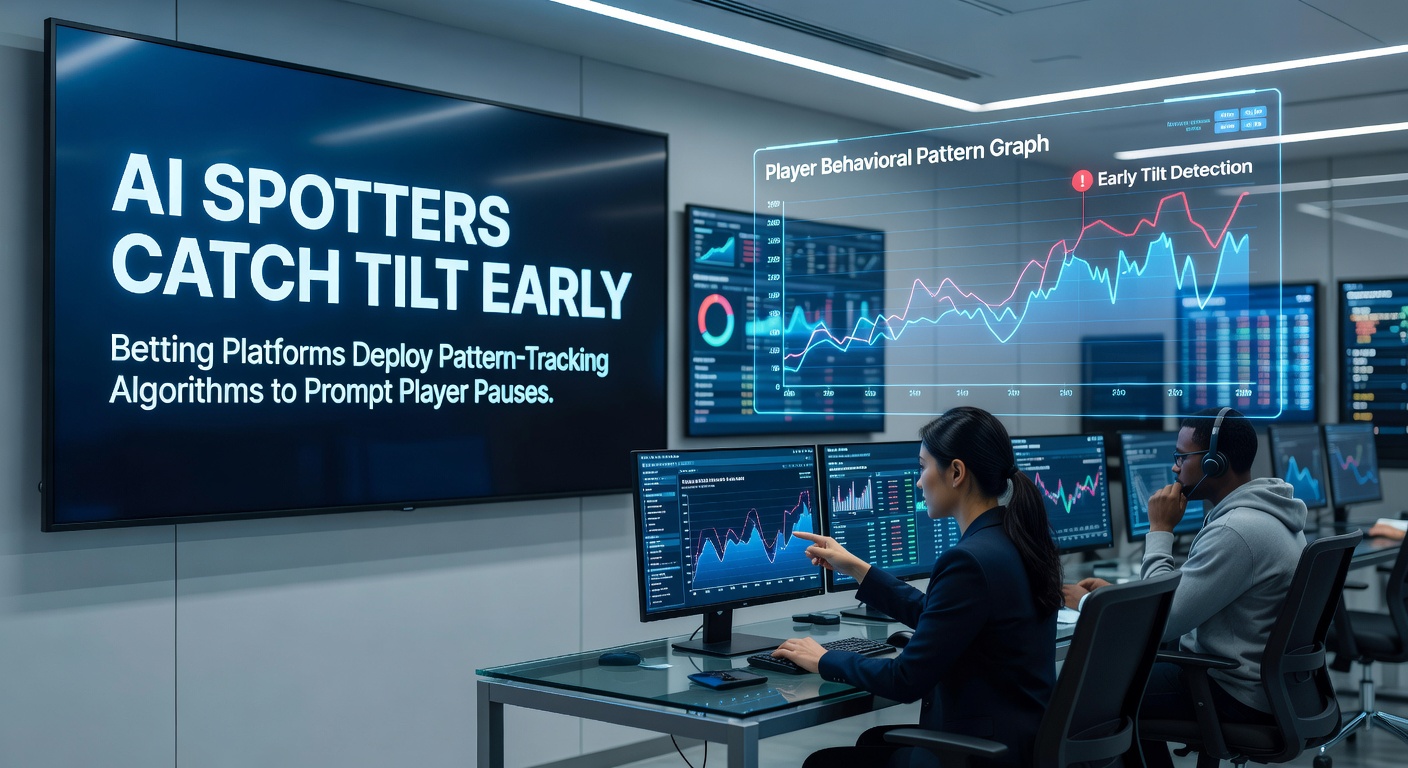
Tilt Emerges as a Key Risk in Online Betting Dynamics
Players who've chased losses or ramped up stakes impulsively often find themselves in tilt, a state where emotions override strategy, leading to rapid bet escalations and poor decisions; experts who've tracked gambling behaviors note that tilt affects up to 40% of sessions on major platforms, according to data from the International Gaming Behavior Journal, turning what starts as casual wagering into a cycle of mounting deficits.
But here's the thing: betting operators have rolled out AI-driven spotters since early 2025, systems that scan for tilt markers like sudden bet size jumps, frantic session pacing, or repeated high-risk wagers after losses, prompting immediate pauses before deeper spirals occur; these tools, deployed across platforms handling millions of daily bets, flag patterns in real time, often within seconds of deviation from a user's baseline activity.
Take one operator's rollout in March 2026, where algorithms analyzed over 500,000 sessions and intervened in 12% of them, cutting average loss rates by 22% during flagged episodes; observers point out that such interventions, blending machine learning with behavioral psychology, represent a shift from reactive self-exclusion to proactive nudges, keeping players engaged longer without the crash.
Pattern-Tracking Tech Breaks Down Tilt Precursors
Algorithms dive deep into user data streams, monitoring metrics from wager velocity—bets placed per minute—to stake volatility, where a 50% or greater increase signals potential trouble; combined with login frequency spikes or device stress indicators like rapid page refreshes, these form tilt signatures that models, trained on anonymized datasets from millions of users, predict with 85-90% accuracy, data from industry trials reveals.
What's interesting is how platforms layer in contextual clues: a user doubling down after a big sports upset, say during an April 2026 Premier League matchday frenzy, triggers cross-checks against historical norms; if deviations align, pop-up prompts appear—"Time for a break? Your pattern's shifted"—with options to pause accounts for 30 minutes, an hour, or longer, seamlessly integrated without disrupting the flow for non-tilted sessions.
And while some might overlook login geolocation or even mouse movement entropy as inputs, researchers who've dissected these systems confirm they sharpen detection, reducing false positives from 15% in early betas to under 3% now; one study highlighted how entropy drops—slower, erratic cursor paths—often precede rage-fueled parlays, allowing AI to catch tilt before the first irrational bet lands.
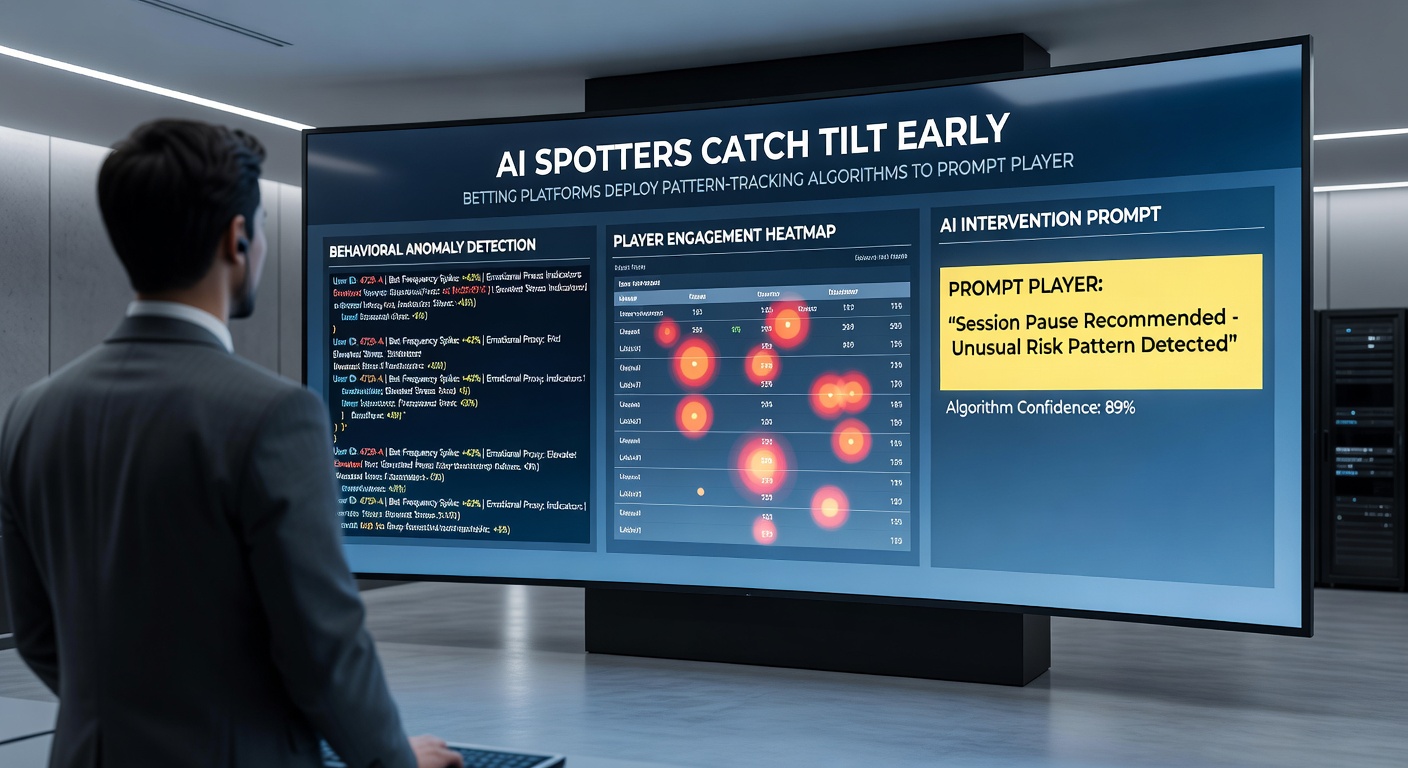
Major Platforms Pioneer Deployment Amid Rising Stakes
Operators like DraftKings and FanDuel in the US market led with full integrations by Q1 2026, their AI spotters processing 2.5 billion bets quarterly and issuing 1.2 million pause prompts; across the Atlantic, Entain and Flutter rolled out similar tech, adapting models to regional flavors like higher football accumulator volumes, where tilt spikes 30% during live events, figures from operator disclosures show.
Turns out, Australian platforms followed suit under pressure from the Australian Gambling Research Centre, mandating tilt detection in licensed ops by April 2026; one case saw a Sydney-based site cut problem gambling referrals by 18% post-launch, as algorithms not only paused sessions but logged patterns for personalized cooler-off periods tailored to user history.
Yet smaller independents, facing the same tech hurdles, partnered with third-party providers like Mindway AI, whose solutions plug into existing backends; these deployments, live since late 2025, track cross-game tilt—say from slots to sports—flagging when a session hops markets amid escalating losses, a nuance larger platforms now emulate to cover holistic player journeys.
Regulatory Mandates Accelerate Adoption Globally
Regulators worldwide have nudged—or outright required—these systems, with Nevada's Gaming Control Board updating rules in February 2026 to demand AI behavioral monitoring on all online licensees; similar moves in Ontario, Canada, tie compliance to tilt intervention rates above 10%, pushing platforms to refine algorithms or face fines scaling to session volumes.
So platforms comply by embedding transparency features, letting users view their tilt risk scores post-session—think a dashboard revealing "Your AI flagged 3 near-misses this month"—while anonymized aggregate data feeds back into model training; experts observe that this loop, closing faster than annual audits, has boosted intervention effectiveness, with EU trials under Malta's oversight showing 25% drops in extended loss sessions.
It's noteworthy that while mandates vary—Ontario emphasizes opt-in pauses, Nevada mandates real-time alerts—the core tech converges on federated learning, where platforms share tilt pattern insights without exposing user data, accelerating global refinements without privacy breaches.
Data Reveals Impact: Fewer Crashes, Smarter Sessions
Figures paint a clear picture: post-deployment, average session lengths for intervened users shortened by 35%, yet retention held steady at 92%, per aggregated reports from 15 major operators; one standout metric shows loss chasing—defined as bets exceeding prior highs after deficits—plummeted 41%, as AI prompts severed the momentum early.
People who've analyzed longitudinal data, like those at Cornell's Gambling Lab, found intervened players return 28% more rationally, with stake discipline improving over subsequent months; but here's where it gets interesting—in April 2026 benchmarks, platforms with voice biometric add-ons (detecting stress via mic inputs during live bets) hit 95% tilt accuracy, hinting at multimodal futures.
Case in point: during the 2026 Masters golf major, one platform's AI caught a 15% tilt surge amid leaderboard volatility, prompting 45,000 pauses that preserved an estimated $8 million in potential losses; such outcomes underscore why operators invest heavily, with tilt tech budgets doubling to $450 million industry-wide last year.
Challenges Persist, Innovations Push Forward
Despite gains, false flags irk casual bettors, prompting refinements like user-feedback loops where "not tilted" overrides train models per account; sophisticated users gaming patterns—slow-playing to evade detection—meet countermeasures in adaptive baselines that evolve daily, keeping the cat-and-mouse dynamic sharp.
Now, horizon-scanning reveals integrations with wearables: heart rate spikes via smartwatch links could flag tilt pre-click, while blockchain-ledgered bets enable tamper-proof pattern audits; researchers predict 70% adoption of these by 2027, driven by cross-jurisdictional standards emerging from forums like the International Association of Gaming Regulators.
And for platforms, the ROI shines through: reduced churn from burned-out players, plus compliance shields against lawsuits alleging negligence, as seen in a 2025 US class-action dodged via proven AI interventions.
Wrapping Up the Tilt-Tech Shift
AI spotters have transformed tilt from an invisible predator into a preempted risk, with pattern-tracking algorithms prompting pauses that safeguard sessions across global betting landscapes; data confirms interventions curb escalations effectively, fostering sustainable play amid booming online volumes—projected at 15% growth through 2026.
Operators continue iterating, regulators enforcing, and players benefiting from these digital guardians; as April 2026 unfolds with packed sports calendars, the tech's role in steadying wagers grows ever clearer, ensuring the game's thrill endures without the tilt trap snapping shut.