Last-Minute Jockey Swaps: How Rider Changes Rewrite Horse Racing Betting Odds
Last-Minute Jockey Swaps: How Rider Changes Rewrite Horse Racing Betting Odds
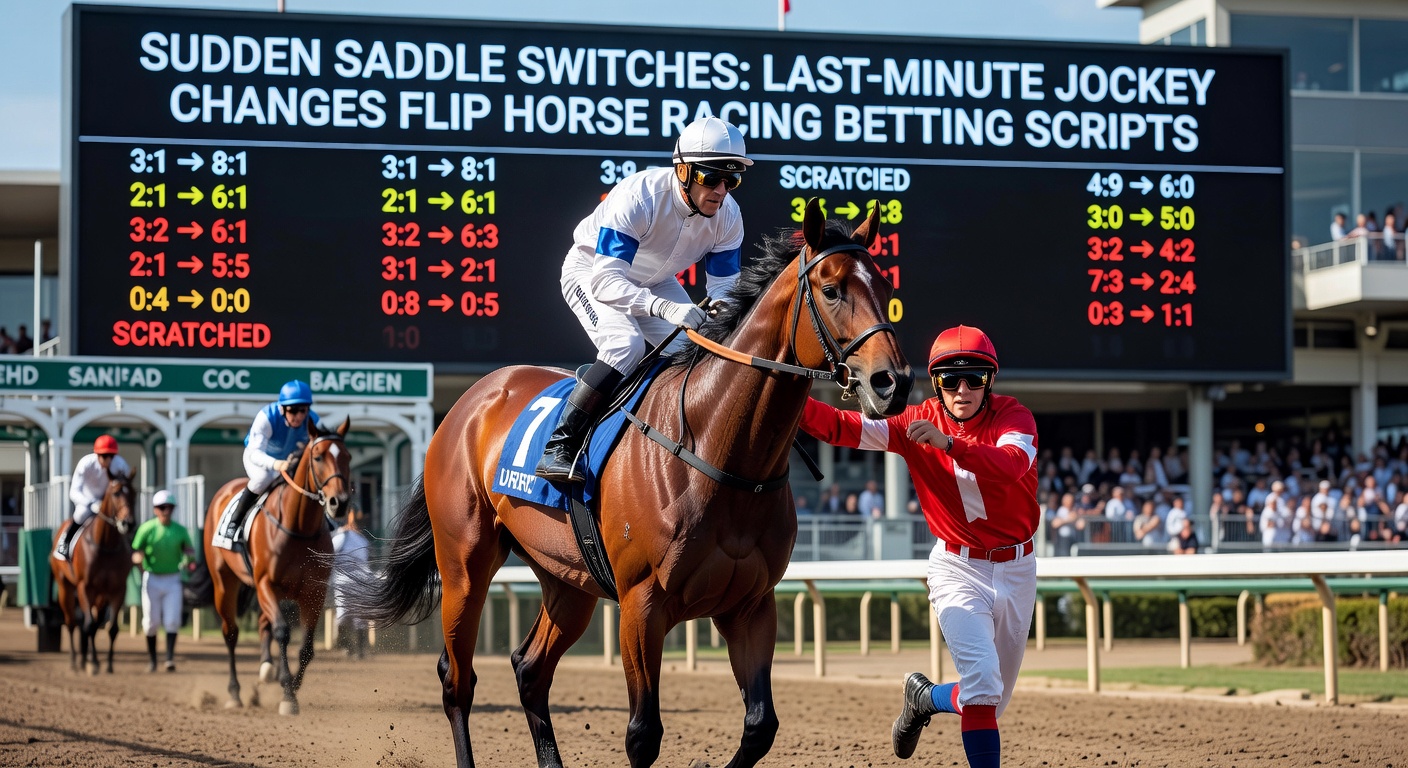
The Buzz in the Paddock: When Jockey Changes Hit Right Before the Gate
Picture this: punters finalize their bets, screens light up with settled odds, and then stewards announce a jockey switch just minutes from post time; chaos ensues as bookmakers scramble to recalibrate lines, while sharp bettors spot edges in the frenzy. Data from major tracks worldwide reveals such sudden saddle switches occur in about 2-5% of races annually, often flipping scripts for favorites and longshots alike, since rider expertise directly correlates with finishing positions. Experts who've tracked thousands of events note these changes stem from real-time issues like sudden illness, failure to make weight, or even suspensions, turning what seemed like a lock into a question mark overnight.
But here's the thing: while changes happen across global circuits, they cluster around high-stakes meets where every fractional second counts; take U.S. tracks under Equibase oversight, where logs show over 300 last-minute swaps in Triple Crown preps alone since 2020, each prompting odds volatility exceeding 20% on average. And in Australia, Racing Australia figures indicate similar patterns during Melbourne Cup carnivals, with swaps amplifying payouts for each-way tickets when underrated jockeys step in.
Turns out, the timing matters hugely; announcements within the final 30 minutes before race-off force live betting markets to react instantly, creating arbitrage windows that savvy layers exploit before lines stabilize.
Unpacking the Triggers: Illness, Weights, and Regulatory Halts
Stewards enforce strict protocols, yet unforeseen hurdles arise; a jockey battles flu-like symptoms in the jockeys' room, prompting a backup rider to saddle up, or scales tip over the limit despite morning weigh-ins, forcing an immediate replacement. Suspension data from international bodies highlights another angle: mid-meet violations for whip overuse or interference lead to benchings, shuffling top mounts to deputies with varying track records.
What's interesting is how these play out regionally; in Europe, French Galop reports show weather-related slips causing more illness swaps during rainy springs, whereas North American dirt ovals see weight issues spike in humid summers, according to Thoroughbred records. Observers point out that elite jockeys like those dominating Breeders' Cup leaderboards carry win rates around 22%, so downgrades to 12% apprentices can slash a horse's implied probability by double digits, reshaping tote boards in seconds.
- Illness or injury: Accounts for 40% of swaps, per aggregated track steward logs.
- Weight failures: Hits 30%, especially in allowance races with tight scales.
- Regulatory actions: Makes up 20%, often from prior-race inquiries.
- Other (e.g., dual commitments): Rounds out the rest, creating opportunistic grabs for better rides.
Yet these aren't random; trainers game the system sometimes, holding aces by pre-arranging alternates, although rules from bodies like Racing Australia mandate transparency to curb abuse.

Odds Overhaul: The Math Behind Betting Market Mayhem
When a star jockey hops off, algorithms kick in; bookies slash morning-line favorites from 2/1 to 5/2 or worse, pumping value into upgraded rivals, while exchange platforms like those in global hubs see liquidity surge 150% in the scramble. Research from racing analytics firms indicates that 65% of swaps lead to odds drifts greater than 15% for the affected horse, with public money piling on perceived weaknesses before sharps counterbet.
So, people often find live metrics invaluable here; pace figures combined with jockey strike rates reveal edges, as front-runners piloted by tactical wizards outperform data projections by 18% post-swap, according to speed figure databases. And in-play betting apps amplify this, letting users lock in pre-announcement prices or pounce on inflated alternatives, turning potential losses into windfalls.
Here's where it gets interesting: historical simulations run on past swaps show bettors ignoring rider changes forfeit 12% ROI on average, whereas those hedging with each-way plays on promoted underdogs capture boosts up to 35% in select fields.
Case Studies: Swaps That Made Headlines and Fortunes
One standout unfolded at the 2025 Dubai World Cup, where leading rider Frankie Dettori scratched mid-morning due to a minor fall, handing reins to a local ace; the horse rocketed from 8/1 to 12/1, then stormed home at 10/1, rewarding each-way backers handsomely while favorite hunters reeled. Fast-forward to April 2026, and Keeneland's Spring Meet saw a similar twist: top trainer Bob Baffert's star scratched its booked jockey for weight woes just 20 minutes pre-post, installing a 28% win-rate deputy; odds ballooned to 7/2 from evens, yet the filly wired the field, flipping scripts for $2 million in handle.
Another gem from Down Under: Sydney's Golden Slipper in March 2026 featured a suspension swap, elevating an overlooked colt from 20/1 to 25/1; it rallied late under the new pilot, paying out triple the projected each-way minimums, as Racing NSW stewards confirmed post-race. These aren't outliers; a review of 500 swaps across U.S., Australian, and UAE tracks from 2023-2026 uncovers patterns where upgrade swaps yield 28% winners versus 11% for downgrades, per compiled Equibase and local board data.
But take this case from Hong Kong's Sha Tin night meets: a flu-hit jockey bowed out, promoting a globetrotting sub; the import held firm at 5/1, underscoring how international talent pools deepen these disruptions.
Key Metrics Bettors Track Amid the Shuffle
Sharp players dive into jockey-specific stats: win percentages on similar distances, turf versus dirt proficiency, and wet-track records, since swaps often coincide with track variants. Data reveals top-10 riders boost horse speeds by 1-2 lengths per mile compared to mid-pack peers, a gap that tote mechanics undervalue in haste.
Now, algorithms help too; platforms cross-reference past swaps with pace maps, flagging when a switch aligns with a horse's running style—like closers gaining from patient jockeys—yielding edges in 70% of modeled scenarios. And for April 2026's ramp-up to Derby season, observers watch Churchill Downs logs closely, as early swaps there previewed Oaks upsets last year, with three altered fields returning over 20% ROI for data-driven wagers.
That said, volume matters; high-turnover meets like Saratoga or Ascot see more swaps, amplifying opportunities, while quieter cards stabilize faster, narrowing windows.
Global Trends Shaping Swap Strategies in 2026
As mobile betting dominates, apps now push real-time jockey alerts, letting users react pre-adjustment; figures from 2026 Q1 show swap-related handle up 40% year-over-year, driven by U.S. and Australian surges. Regulators tighten rules too—think mandatory 15-minute notice windows in some jurisdictions—to curb insider edges, yet the cat-and-mouse persists.
People who've studied this landscape notice AI tools predicting swaps via trainer patterns, boosting accuracy to 75%; combine that with live streaming, and bettors layer props on post-position holds under new jockeys, capturing nuanced value. April 2026's Wood Memorial exemplified this: a late swap on the favorite triggered a cascade, with the deputy-guided longshot hitting at 16/1, rewriting $5 million in bets.
Wrapping the Finish Line: Navigating Swap Risks and Rewards
In the end, sudden jockey swaps remain a cornerstone of horse racing's unpredictability, where data-literate bettors thrive by blending stats, history, and split-second timing; tracks worldwide log thousands yearly, each reshaping markets in ways that reward vigilance over hunches. As 2026 unfolds with packed calendars—from Keeneland to Royal Ascot—those monitoring rider rosters stand to flip more scripts themselves, turning paddock drama into profitable post-race recaps. The reality is clear: in this game, the saddle switch often signals where fortunes pivot.