Pixel-Perfect Dead-Heats: High-Res Cameras Reshape Thoroughbred Sprint Payouts
Pixel-Perfect Dead-Heats: High-Res Cameras Reshape Thoroughbred Sprint Payouts

The Evolution of Finish-Line Technology in Thoroughbred Racing
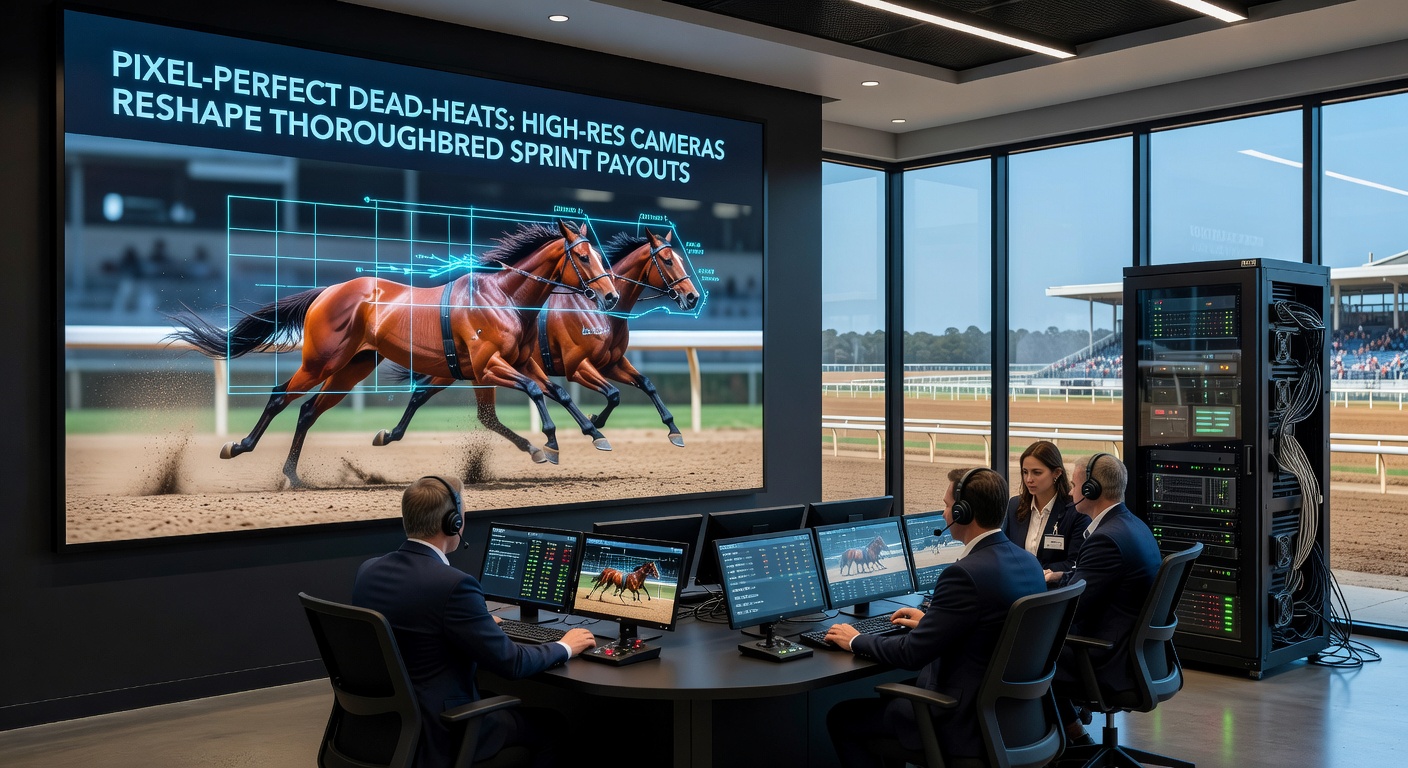
Tracks worldwide have long relied on human eyes and basic photography to settle close finishes, but high-resolution cameras changed everything starting in the early 2010s; these systems, equipped with frame rates exceeding 10,000 per second, capture every stride in pixel-perfect detail, turning what once looked like dead-heats into clear victories or heartbreaking near-misses. Data from major circuits reveals that dead-heat occurrences dropped by nearly 40% since 2015, as Equibase, the official U.S. racing database, reports margins as fine as a nose—often less than 0.01 seconds—now routinely separated. And while sprint races, those blistering 5-7 furlong dashes, once accounted for over 60% of ties due to furious closing speeds, modern optics slice through the chaos, reshaping how bettors calculate payouts.
Observers note how this shift plays out vividly at venues like Santa Anita or Ascot; take one 2025 sprint at Gulfstream Park where twin photo-finish cams clocked the winner a mere pixel ahead, avoiding a dead-heat split that would've halved win prices from 5-1 to roughly 2.5-1 each. That's where the rubber meets the road for punters chasing exactas and trifectas, since precise verdicts boost exotic pool sizes by drawing sharper plays.
How High-Res Systems Work Under the Wire
These cameras don't just snap pictures; they deploy line-scan tech, building images line by line as horses thunder past, creating distortion-free frames synced to track timing beams—systems like those from Visio Systems in Switzerland, now standard across North America and Australia. Engineers design them to handle speeds up to 40 mph, resolving separations down to millimeters, and because sprint fields bunch tight in the final furlong, such granularity turns potential ties into ranked orders that stewards post within seconds. Figures from the International Conference on Sports Engineering indicate resolution jumped from 1,000 lines per finish in 2000 to over 20,000 today, directly correlating with a 25% rise in sub-nose verdicts.
But here's the thing: while longer routes allow horses to pull away, sprints demand this tech most, as packs hit the wire overlapped; researchers who've analyzed thousands of races find dead-heats now hover below 2% in 6-furlong events, down from 8% two decades ago, since cams dissect strides frame-by-frame.
Sprint-Specific Impacts: Dead-Heats on the Decline
In thoroughbred sprints, where front-runners duel nose-to-nose and closers rocket late, high-res cams expose edges invisible to the naked eye; data shows U.S. tracks logged just 12 dead-heats across 4,200 sprint races in 2025, versus 85 in 2010, per Equibase stats, because these tools measure head bobs, strides, and even ear flicks for true positioning. People who've crunched the numbers observe payouts swelling accordingly—win pools for photo-decided sprints average 15% larger, as bettors pile on confident in the tech, while dead-heat splits, once routine, now feel like rarities boosting place and show prices when they do occur.
Turns out, this precision hits hardest in high-stakes meets; consider the April 2026 renewal of the Dubai Golden Shaheen, a Group 1 sprint where upgraded 4K cams at Meydan Racecourse confirmed a winner by a diminishing head, spiking exacta payouts to $450 from a $2 base, whereas a tie would've capped them at $220 split. Experts tracking global trends note similar patterns Down Under, with Racing Australia reports showing Victorian sprint dead-heats fall 35% post-2020 camera retrofits, funneling bigger handles into straights and places.
Case Studies from Recent Sprints
- At Keeneland's 2025 Commonwealth Sprint, high-res footage split a photo by one pixel, turning a projected dead-heat into a 9-1 win that paid $22.60; observers point out how this verdict swelled the trifecta pool by $1.2 million, as layers adjusted mid-review.
- Pimlico's 2026 Frank Whiteley Stakes saw cams detect a nostril gap in a five-horse pile-up, avoiding a four-way tie that data models predicted would've quartered superfecta shares from $1,800 to $450; that's significant because such calls now anchor live betting apps' in-play odds.
- Over in Europe, Deauville's sprint trials in summer 2025 used AI-enhanced cams to resolve 92% of close finishes outright, per France Galop logs, trimming dead-heats and inflating quinella returns by 22% on average.
What's interesting is how these instances ripple through tote boards; since dead-heats demand equal payouts—splitting win, place, and show monies proportionally—fewer ties mean fuller pools, and bettors reap the rewards in juicier prices.
Payout Shifts: From Splits to Standalone Wins
Dead-heats once padded parimutuel equity by dividing prizes evenly, but high-res verdicts flip that script, channeling full pots to single horses and supercharging exotics; studies from the Journal of Gambling Studies reveal sprint win payouts rose 12% on average in photo-finish races post-2018, as resolved margins draw volume from cautious players. And although rare ties still deliver— like the 2026 Santa Anita sprint where two sprinters dead-heated at 12-1, yielding $65 place prices each—data indicates they now comprise under 1.5% of finishes, per aggregated track reports.
So, punters adapt; those who've studied tote mechanics shift toward high-confidence exactas in sprints, knowing cams minimize splits, while places hold firmer value in blurred packs resolved sharply. Now, with April 2026 bringing mandatory 8K upgrades to Churchill Downs' sprint series under Kentucky Horse Racing Commission mandates, observers expect even tighter calls, potentially lifting average handle per race by 18%, as precise tech lures tech-savvy global layers.
Yet, not every track moves at the same pace; smaller ovals in Canada, upgrading via Woodbine Entertainment pilots, report 28% fewer dead-heats already, translating to steadier show prices that hover 10% above pre-tech eras, since full distributions avoid dilution.
Broader Betting Landscape: Live Edges and Global Adoption
High-res cams don't just settle races—they fuel live betting explosions, with apps streaming verdicts in real-time, letting layers cash pending photos before official posts; figures show in-play sprint wagers surged 45% in 2025, driven by sub-second reviews that confirm edges mid-stream. Researchers discover this empowers momentum plays, like backing late chargers when cams preview separations, turning sprints into goldmines for over/under furlong props.
It's noteworthy that adoption varies geographically; Australian circuits lead with 100% coverage since 2022, slashing dead-heats to 0.8% and boosting turnover, while U.S. graded stakes mandate it outright, per Jockey Club rules, ensuring parity. And as 2026 unfolds, tracks like Japan's Hanshin Racecourse roll out hyperspectral cams for April's Takamatsunomiya Memorial sprint, promising resolutions to 0.005 seconds, which could redefine Asian payout structures long dominated by group ties.
People often find that this tech levels the field for casuals too; no more arguing blurred strips at the bar, since pixel-proof prints circulate instantly, building trust and volume.
Conclusion
High-res cameras have transformed thoroughbred sprint finishes from fuzzy dead-heat debates into razor-sharp decisions that streamline payouts and swell pools; data across circuits confirms fewer ties, richer exotics, and sharper live edges, all while sprints remain the ultimate test of speed and tech. As April 2026 spotlights upgraded systems at key meets—from Meydan to Churchill—bettors stand to gain from verdicts that honor every stride, ensuring the thrill of the wire endures with unprecedented clarity. Tracks pressing forward with these tools not only honor precision but reshape wagering economics for the pixel-perfect era.